Water Heater Evaluation Project
Homeowner Water Heater Inspection & Code Compliance Guide
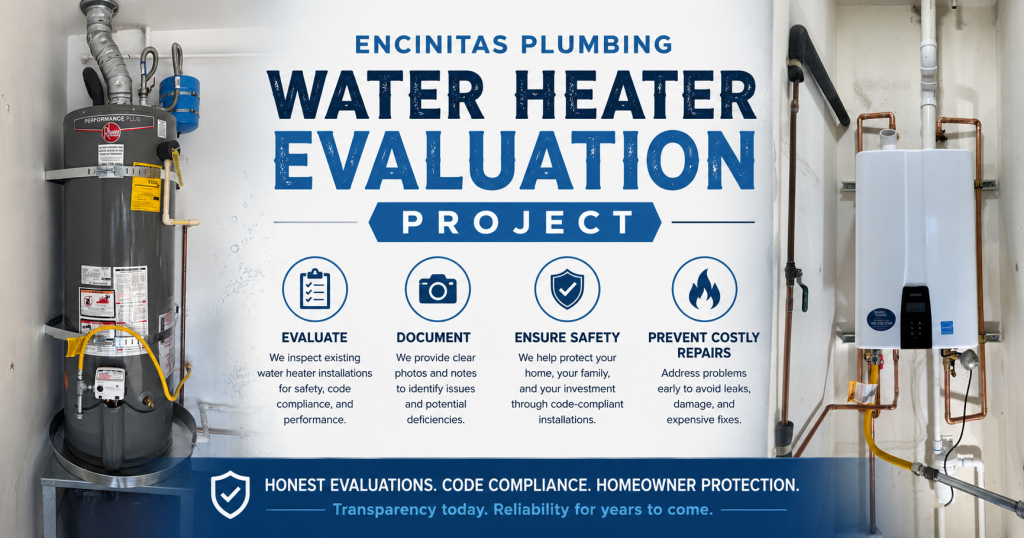
Think your water heater may not have been installed correctly?
Many homeowners don’t discover installation deficiencies until years later—often after another plumber services the unit or the water heater begins leaking prematurely.
Improper water heater installations can reduce equipment life, void manufacturer warranties, create safety hazards, and result in costly repairs that could have been avoided.
Encinitas Plumbing offers a complimentary preliminary photo review of existing residential water heater installations to identify visible code deficiencies and recommend corrective action where appropriate.
What We’ll Review
Upload clear photos showing:
- Entire water heater (floor to ceiling)
- Manufacturer rating plate
- Temperature & Pressure (T&P) relief valve
- T&P discharge piping
- Vent connector and vent termination
- Gas piping and sediment trap
- Water piping
- Expansion tank (if installed)
- Earthquake straps
- Drain pan
- Condensate drain (tankless)
- Pressure regulator (if accessible)
What You’ll Receive
After reviewing your photos, we’ll provide:
✓ Visible code deficiencies
✓ Safety concerns
✓ Workmanship observations
✓ Recommendations for correction
✓ Estimated cost of repairs (if desired)
✓ Information regarding permit requirements
✓ Guidance regarding available homeowner resources
Why This Guide Exists
This evaluation guide is part of the North County Plumbing Listing Transparency Project. Readers interested in the origins of the project may also wish to review the History of the Encinitas Plumbing Name.
Many homeowners assume they have no options if the company that installed their water heater has:
- Closed its business
- Changed its company name
- Changed ownership
- Begun operating through a different corporation or LLC
That is not always the case.
Public records—including contractor license records, business filings, permits, invoices, manufacturer registrations, inspection records, and other documentation—may help establish who performed the installation and what options may be available to the homeowner.
Signs Your Installation May Not Meet Current Code
Examples include:
- Missing expansion tank
- Missing expansion tank support bracket
- No sediment trap on gas line
- Improper T&P discharge piping
- Venting deficiencies
- Improper earthquake strapping
- Improper water flex connectors
- Missing drain pan where required
- Improper condensate disposal
- No thermal expansion protection
- Incorrect combustion air
- Unsupported piping
- Improper pressure regulator installation
- Missing dielectric protection
- Water heater installed without required permit
Common Problems We Find
- Water heaters installed without permits
- Improper venting
- Missing safety devices
- Incorrect gas piping
- Code violations overlooked during installation
- Premature corrosion
- Water damage caused by improper workmanship
Has Your Original Plumbing Company Closed?
If your water heater was installed years ago, don’t assume there is no way to determine who performed the work.
Helpful records may include:
- Original invoice
- Credit card statement
- Escrow paperwork
- Home inspection report
- Permit history
- Manufacturer warranty registration
- Service records
- Photographs
- Stickers left on the water heater
What If Deficiencies Are Found?
If we identify visible workmanship or code issues, we’ll explain:
- What is incorrect
- Why it matters
- How it should be corrected
- Estimated repair cost
If requested, we can also provide general information regarding homeowner resources, including contacting the installing contractor, the local building department, or the California Contractors State License Board.
Frequently Asked Questions
Does every water heater require a permit?
Most replacements require a permit in California. Requirements vary by jurisdiction.
Does passing time eliminate workmanship concerns?
Not necessarily. Some workmanship deficiencies may not become apparent until years after installation.
Can a water heater still work if it wasn’t installed correctly?
Yes.
Many improperly installed water heaters continue operating for years despite having code deficiencies or safety issues.
What if the original company has closed or changed names?
Business changes do not necessarily prevent homeowners from researching who performed the installation. Public records often provide valuable historical information.
Request Your Complimentary Photo Review
Upload:
✓ Floor-to-ceiling photo
✓ Rating plate
✓ Venting
✓ Water piping
✓ Gas piping
✓ Pressure regulator
We’ll review your installation and let you know if anything appears to require further attention.